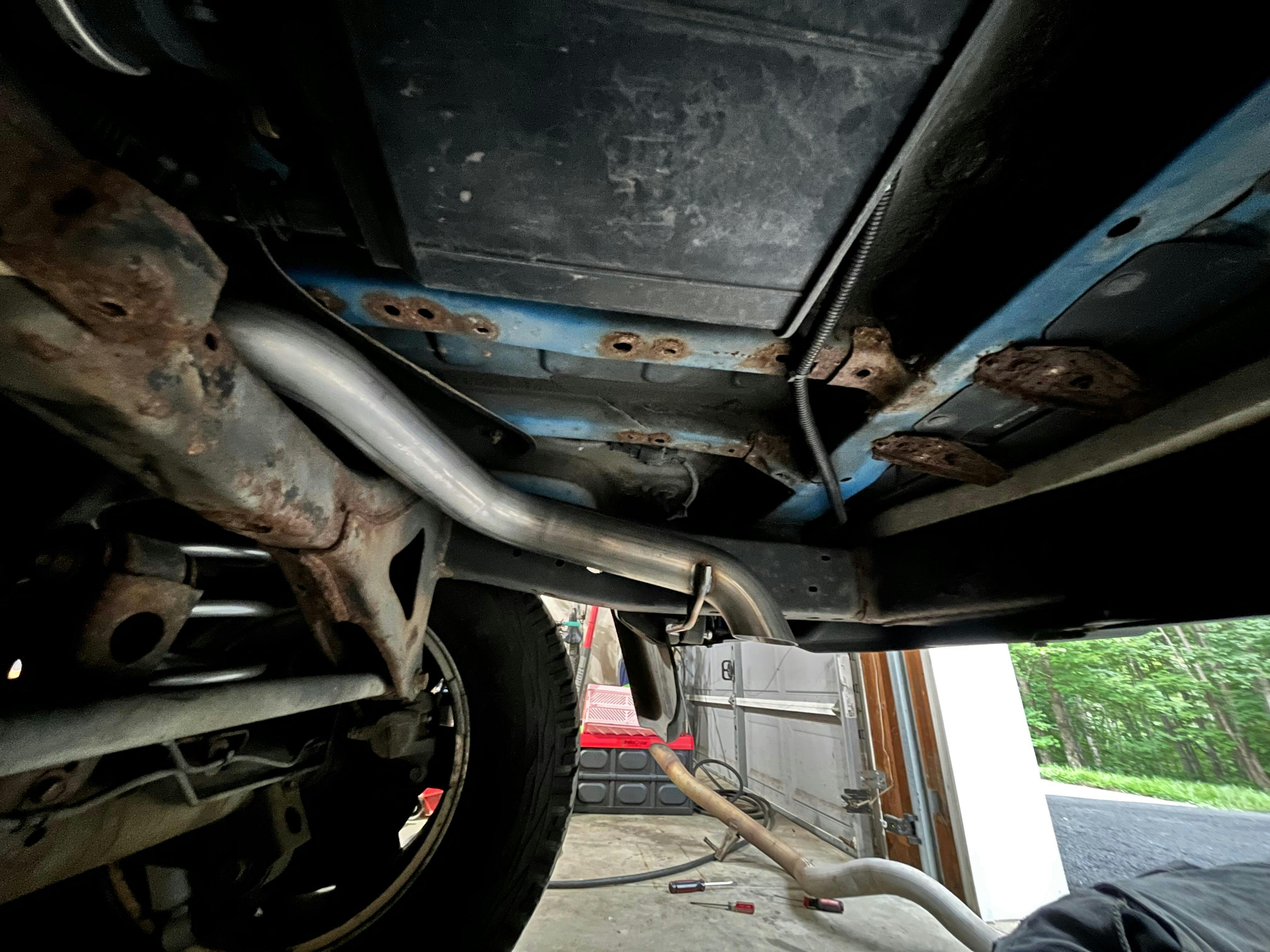
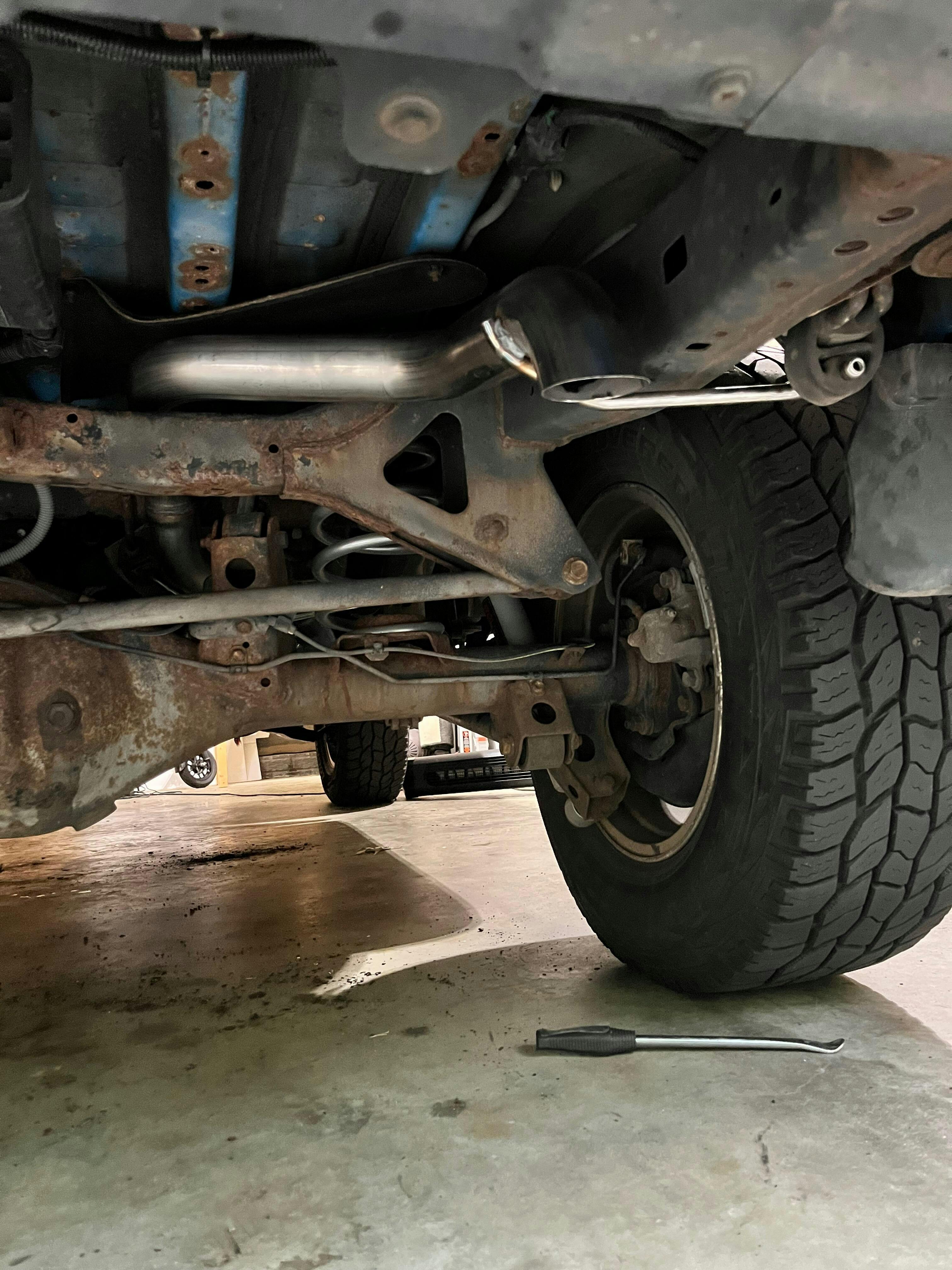
BOLD Performance Cat-Back Exhaust
P/N# RBD-C1T63T-04
(NOT in stock now, ETA 5/1/2026)
BOLD Performance exhaust is an OEM+ replacement for your factory steel system. Constructed from T304 stainless steel with a high‑clearance redesign, it features precise MIG/TIG welds and delivers a sportier, more aggressive tone under acceleration. Superior fit, finish, and corrosion resistance compared with stock.
Features:
- Angle-cut exhaust outlet for maximum ground clearance
- 2.5" diameter, mandrel-bent, T304 stainless steel construction
- Polished T304 stainless steel hi-flow muffler
- OEM hanger position
- All hardware included
Sound dB Level - measured at parked position
| Stock Exhaust dB | BOLD Exhaust dB | |
| WARM IDLE | 52 | 53 |
| 1000 RPM | 59 | 57 |
| 2000 RPM | 65 | 63 |
| 3000 RPM | 68 | 68 |
| 4000 RPM | 74 | 75 |
Compatible Wheelbase Application:
- 2006-2022 TOYOTA FJ Cruiser 4.0L V6
FREE Shipping to Continental US (Lower 48 states) & Canada
Why T304 Stainless Steel? (AI Overview)
T304 stainless steel is chosen over Aluminum/Aluminized steel and T409 stainless primarily for its superior, long-term corrosion resistance and durability in harsh environments. It features high chromium (approx. 18-20%) and nickel (approx. 8-10%) content, preventing rust in salty or wet conditions, whereas 409 develops surface rust and aluminized steel eventually corrodes.
Is T304 Stainless Steel Rust Free? (AI Overview)
T304 (or 304) stainless steel is highly resistant to rust and corrosion, but it is not completely rust-proof. It is considered the industry standard for "stainless" because it resists rust in most normal, everyday environments (like kitchen appliances, indoor sinks, and clean, dry environments) for many years.
However, T304 can still rust under specific, harsh conditions:
- Chloride/Salt Exposure: Coastal areas, saltwater exposure, or contact with salts can cause pitting and rust, as 304 is sensitive to chloride.
- Harsh Chemicals: Exposure to bleach, muriatic acid, or strong cleaning products can break down the protective chromium oxide layer.
- Contamination: If 304 comes into contact with iron particles or mild steel, those contaminants will rust, causing "surface rust" that appears to be on the stainless steel.
- High Humidity/Water: Long-term exposure to water, especially if not cleaned regularly, can cause surface staining or corrosion.
For environments with high salt or chemical exposure, 316 stainless steel is generally preferred over 304.
Customer Reviews
Overall I have to give it a 5 of 5.
There were some minor hiccups. It does not come with the bolts or gasket needed to connect to Cat flange. I was able to back the original bolts out without breaking them but they were badly degraded and stripped when I tried to re-use them. The gasket was not even close to re-usable. So be prepared with the parts you'll need ahead of time.
The muffler itself is awesome though. I was not looking for a loud muffler. FJs are not super insulated vehicles and I do take it on long trips. I bought this muffler because it sounded quieter than the original muffler in online side-by-side recordings. It did not disappoint. Despite being quiet, it also still manages to have a nice growl to it.
Super happy with the purchase. Thanks Bold Performance.
I got this installed on my 07 FJ and the install was easy. My old catbsck had rusted out but since the FJ is a daily, I didn’t want a loud exhaust. This exhaust is just barely louder than the stock exhaust and the fitment is perfect. I love how it tucks up higher and the tail pipe is actually hidden underneath and doesn’t stick out anywhere.
Next test is to see how long it lasts against rust! Overall, very pleased for price and quality. Again, it’s a quiet exhaust which was what I wanted!